
Donec efficitur, ligula ut lacinia
viverra, lorem lacus.
 IVF Cost in India
Donec efficitur, ligula ut lacinia
viverra, lorem lacus.

The IVF success rate in India is an important factor for couples considering in vitro fertilization (IVF) treatment. IVF has become a widely used fertility treatment in India, and modern fertility centers offer advanced technologies, experienced fertility specialists, laboratory facilities, and personalized treatment plans.
However, IVF success is not guaranteed for every patient. The chances of pregnancy can vary depending on age, egg and sperm quality, embryo quality, fertility diagnosis, medical history, lifestyle, and the type of IVF treatment used.
If you are researching the IVF success rate in India, this guide explains the major factors that influence IVF outcomes, expected success rates, treatment steps, and important questions to ask before choosing a fertility center.
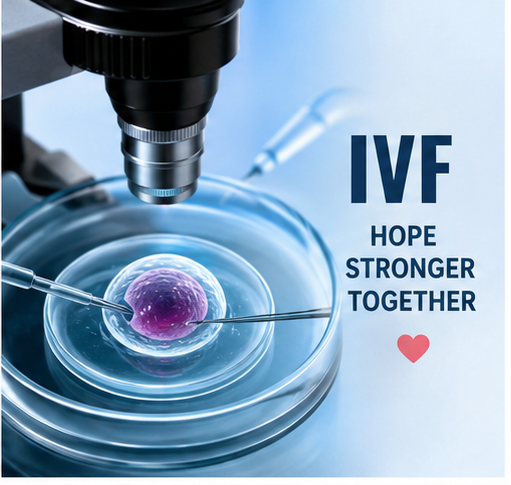
The IVF success rate in India refers to the percentage of IVF treatment cycles that result in a successful outcome. Depending on the clinic and the patient group being measured, “success” may mean a positive pregnancy test, a clinical pregnancy confirmed by ultrasound, or a live birth.
This distinction is important because a positive pregnancy test does not always result in a live birth. Therefore, patients should ask fertility clinics exactly how they calculate and report their IVF success rates.
In general, younger patients with good ovarian reserve and good-quality eggs tend to have better IVF outcomes. Success rates usually decrease with increasing maternal age, particularly because egg quality and chromosomal normality tend to decline with age.
Age is one of the most important factors affecting IVF outcomes. Female age has a significant relationship with egg quality and embryo development.
The following table provides a general illustration rather than a guaranteed individual outcome:
| Age Group | General IVF Outcome Trend |
|---|---|
| Under 30 | Generally higher chances |
| 30–34 | Generally favorable chances |
| 35–37 | Moderate to favorable chances |
| 38–40 | Success may begin to decline |
| 41–42 | Lower chances compared with younger age groups |
| 43+ | IVF using own eggs may have substantially lower chances |
These figures should not be interpreted as a personal prediction. The IVF success rate in India can differ significantly between individuals and clinics.
A fertility specialist may evaluate ovarian reserve tests, ultrasound findings, previous IVF history, sperm parameters, medical conditions, and embryo development before estimating an individual’s chances.

Several factors can influence the outcome of IVF treatment.
Female age is one of the strongest predictors of IVF outcome. As age increases, the number and quality of eggs generally decline. This can affect fertilization, embryo development, implantation, and the risk of chromosomal abnormalities.
Good-quality eggs can improve the likelihood of creating viable embryos. Egg quality is closely related to age but can also be influenced by individual reproductive health.
Sperm count, motility, morphology, and DNA integrity may influence fertilization and embryo development. When sperm-related infertility is present, treatments such as ICSI may sometimes be recommended.
Embryo quality plays an important role in implantation. Fertility laboratories assess embryos according to their development and appearance.
In selected cases, embryo genetic testing may be considered. However, genetic testing is not appropriate or necessary for every patient.
The uterus and endometrium need to be suitable for embryo implantation. Conditions such as certain fibroids, polyps, adhesions, or other uterine abnormalities may affect treatment outcomes.
The underlying reason for infertility can influence IVF treatment. Possible causes include blocked fallopian tubes, ovulation disorders, endometriosis, diminished ovarian reserve, male-factor infertility, and unexplained infertility.
Smoking, excessive alcohol consumption, obesity, poor nutrition, lack of physical activity, and inadequate sleep may negatively affect reproductive health.
A fertility specialist can recommend appropriate lifestyle changes based on the patient’s individual situation.
Many couples search for the IVF success rate in India for the first attempt. It is understandable to hope that IVF will work during the first cycle, but there is no guarantee that a single IVF cycle will result in pregnancy or live birth.
The outcome of the first IVF cycle depends on:
If the first IVF attempt is unsuccessful, the fertility specialist may review the treatment cycle and determine whether changes should be made before another attempt.
A second IVF cycle may provide another opportunity to achieve pregnancy. In some cases, doctors can learn valuable information from the first cycle.
For example, the first treatment may reveal:
The treatment plan can then be adjusted according to the patient’s response.
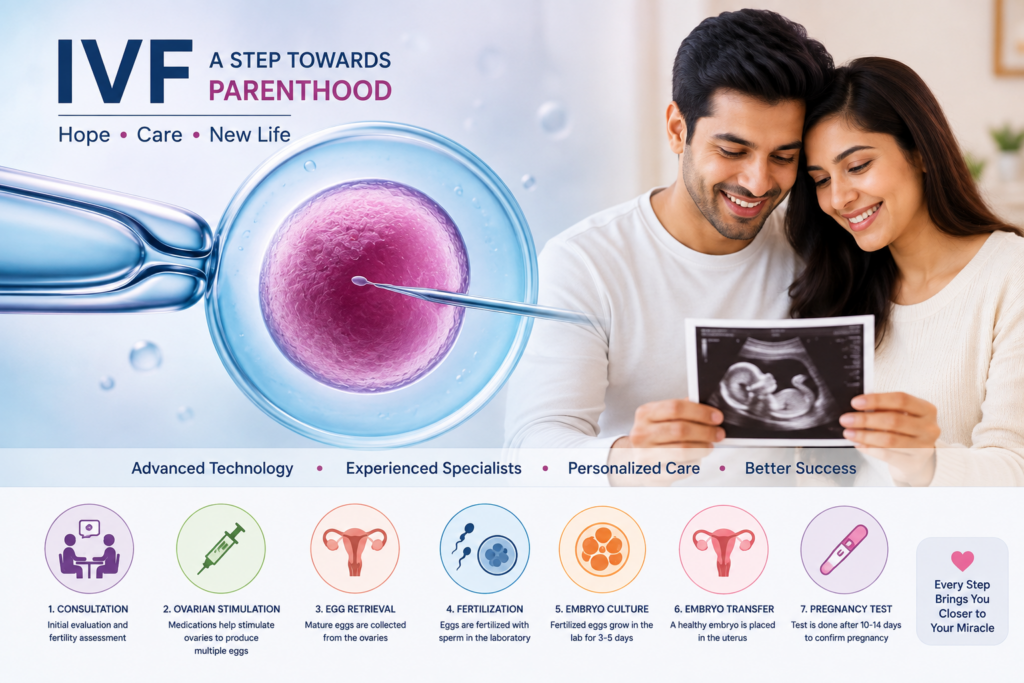
ICSI, or intracytoplasmic sperm injection, is an assisted fertilization technique in which a single sperm is injected directly into an egg.
ICSI may be recommended in certain cases, particularly when there is significant male-factor infertility or previous fertilization problems.
However, ICSI does not automatically guarantee a higher overall pregnancy or live-birth rate for every patient. The decision should be based on the individual’s clinical situation.
For some patients, using donor eggs may be recommended when egg quality or ovarian reserve is significantly reduced.
Because donor eggs generally come from younger screened donors, outcomes may be more favorable in some groups than IVF using the patient’s own eggs. However, individual outcomes vary.
Patients considering donor-egg IVF should discuss medical eligibility, legal requirements, screening, treatment procedures, and costs with a qualified fertility specialist.
Frozen embryo transfer, commonly called FET, involves transferring a previously frozen embryo during a later cycle.
Embryo freezing and modern vitrification techniques allow fertility laboratories to preserve embryos for future use.
The outcome of frozen embryo transfer depends on factors such as embryo quality, patient age, uterine preparation, endometrial condition, and the stage and quality of the embryo being transferred.
When comparing fertility centers, patients should understand how success rates are calculated.
A clinic may report:
These measurements are not interchangeable.
For example, a pregnancy rate may be higher than a live-birth rate because not every pregnancy results in a live birth.
Therefore, when researching the best IVF success rate in India, patients should look beyond a single percentage and ask what the percentage actually represents.
Understanding the IVF process can help patients know what to expect.
The doctor reviews the patient’s medical and fertility history and recommends appropriate investigations.
Fertility medications are used to stimulate the ovaries so that multiple follicles can develop.
Ultrasound scans and blood tests may be performed to monitor follicle development and hormone levels.
When the follicles reach an appropriate stage, the eggs are collected through a medical procedure.
The retrieved eggs are fertilized with sperm in the laboratory. Conventional IVF or ICSI may be used depending on the clinical situation.
The embryos are monitored in the fertility laboratory as they develop.
A suitable embryo may be transferred into the uterus.
A blood pregnancy test is performed after the appropriate waiting period.
There is no method that can guarantee IVF success, but patients can take steps that may support overall reproductive health.
Take prescribed medicines exactly as directed by the fertility team.
Being significantly underweight or overweight may affect reproductive health. A doctor or dietitian can provide individualized guidance.
Smoking can negatively affect fertility and reproductive outcomes. Stopping smoking is beneficial for overall health as well.
Patients should discuss alcohol use with their fertility specialist and follow medical advice during treatment.
A balanced diet containing vegetables, fruits, whole grains, protein sources, and healthy fats can support general health.
Conditions such as diabetes, thyroid disorders, or other medical problems should be appropriately managed with professional guidance.
The quality of the embryology laboratory, fertility specialists, treatment protocols, monitoring, and patient care can all be important considerations.
Instead of choosing a fertility center only because it advertises the “highest IVF success rate in India,” compare several factors.
Consider:
A clinic that reports results transparently can make it easier for patients to understand what its published statistics mean.
IVF cost in India can vary according to the city, fertility center, treatment protocol, medicines, laboratory procedures, and additional services required.
The total cost may increase if patients require procedures such as ICSI, embryo freezing, donor eggs, genetic testing, or additional IVF cycles.
It is important to ask the clinic for a detailed treatment estimate rather than comparing only the basic IVF package price.
The relationship between IVF cost and success rate should also be considered carefully. A higher price does not automatically mean a higher chance of success.
India is a popular destination for fertility treatment because patients may have access to experienced fertility specialists, modern reproductive technologies, and comparatively affordable treatment costs.
However, patients should not select a country or clinic based only on an advertised success percentage.
When comparing IVF treatment in different countries, consider:
There is no single IVF success rate that applies to everyone in India. Success depends on age, egg and sperm quality, embryo quality, infertility diagnosis, uterine health, laboratory standards, and treatment type.
IVF can result in pregnancy during the first attempt, but success is not guaranteed. Some patients require more than one cycle.
Yes. Age is one of the most important factors affecting IVF outcomes, particularly because egg quantity and quality generally decline with age.
IVF is a commonly used assisted reproductive technology, but like any medical treatment, it has potential risks. Patients should discuss the benefits and risks with their fertility specialist.
The number of cycles varies from patient to patient. A fertility specialist can review previous treatment results and provide individualized guidance.
The IVF success rate in India depends on many individual and clinical factors. Age, egg quality, sperm quality, embryo quality, uterine health, infertility diagnosis, laboratory standards, and treatment planning can all influence the outcome.
Rather than focusing only on a clinic’s advertised percentage, patients should understand how the success rate is calculated and whether it represents pregnancy, clinical pregnancy, or live birth.
For couples researching IVF Cost India, IVF Cost In India, and IVF treatment in India, comparing treatment quality, transparency, experience, and total expenses can help them make a better-informed decision.
Always consult a qualified fertility specialist for a personalized assessment before beginning IVF treatment.